
 English
 German
 French
 Spanish
 Portuguese
 Italian
 Polish
 Turkish
 Romanian
 Greek
Greek
 Bulgarian
 Russian
 Arabic
 Hindi
Hindi
TRANSFER TOOLS FOR SHEET METAL PROCESSING & SHEET METAL FORMING
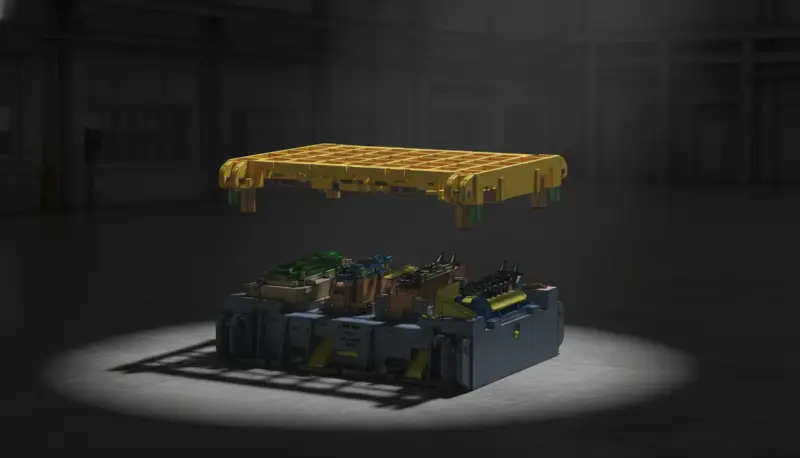
Transfer Tools for Sheet Metal Processing and Sheet Metal Forming
Transfer tools are the established standard in industrial sheet metal processing and sheet metal forming whenever large, demanding sheet metal parts must be produced reliably across multiple stations in high volumes. In modern press shops, transfer tools combine precise forming technology with controlled part handling, enabling drawing, redrawing, trimming, piercing, and calibrating to run stably and repeatably in clearly defined process steps. This is exactly why transfer concepts are used especially where a classic progressive die reaches its limits, for example due to part size, draw depth, sensitive surfaces, or complex changes in material flow. Evomatec designs and manufactures transfer tools for sheet metal forming with the aim of combining process capability, tool service life, and series quality into an economical overall system.
To evaluate transfer technology properly, you look beyond the tool itself and consider the entire process chain. A transfer process is always an interaction of tool design, press technology, transfer handling or robot handling, lubrication, blank logistics, sensors, quality inspection, and maintenance. The decisive advantage is that each station has a specific task and can be optimized in a targeted way, without forcing compromises into a single tool. This increases process transparency, makes root-cause analysis easier, and allows critical quality characteristics to be secured exactly at the points where they are created. In many customer projects, Evomatec relies on structured acceptance procedures and clearly documented inspection routines so that inspections are carried out with the highest level of care and quality targets as well as CE-compliant safety are reliably maintained throughout the production environment.
Definition and Basic Principle of Transfer Tools
What Transfer Tools Mean in Practice
Transfer tools are a multi-station tooling solution in which a part is transported from station to station within a press or across a defined press line. Between stations, part movement does not take place via a continuously advancing strip, but via a transfer mechanism that deliberately grips, lifts, guides, positions, and places the workpiece. Depending on the design, transfer tools can run in a single press as an integrated multi-station tool or as a system of tools with synchronized transfer between presses. The key point is that the blank or preform is moved in a controlled manner after each stroke, so that each station can perform a defined forming, cutting, or calibrating task.
Typically, transfer processes consist of a sequence of a drawing station, redrawing stations, trim and cut-off stations, piercing and forming combinations, and a final calibration station plus a take-off station. The transfer ensures that the part is referenced repeatably at every stage. This defined positioning is a key to dimensional accuracy, hole pattern accuracy, edge quality, and repeatable functional surfaces.
Distinction from Progressive Dies and Tandem Tools
Transfer tools are often confused with progressive dies or tandem tools, although the process logic is clearly different. A progressive die is strip-based. The strip advances in steps and carries the blank through multiple stations via carrier webs. This is very efficient, but reaches its limits once parts are large, deep drawn, sensitive, or geometrically complex to the extent that they cannot be guided safely on a strip or can no longer be transported stably after a forming stage.
Tandem tools, by contrast, distribute the process steps across individual tools operating in separate stations or presses. Parts are removed after each stroke and transported to the next station, often via robot handling or a transfer axis, sometimes manually. Transfer tools sit between these worlds. They combine the station-by-station process chain with integrated, highly precise handling within a transfer press or press line. This enables high output together with controlled part guidance and high process stability for demanding components.
Why Transfer Tools Dominate in Series Production
In high-volume production, especially in the automotive industry, every second of cycle time matters, but stable quality matters even more. Transfer tools dominate because they can produce large formed parts at high speed without leaving positioning, part handling, and process windows to chance. Particularly for body and structural parts, where functional surfaces, crash requirements, and assembly references must fit precisely, the transfer logic offers more controllability. Evomatec integrates transfer concepts as an overall system in which tooling, handling, and quality assurance are designed together. Based on extensive experience from many customer projects, inspections and releases are organized so that quality and CE-compliant safety are maintained in a traceable and lasting way.
Historical Development of Transfer Tools
From Manual Transfer to Highly Automated Transfer Presses
The basic idea of forming parts in multiple stages is older than modern press technology. Early multi-stage processes were often carried out manually. With rising volumes and increasing part complexity, that was neither cycle-time capable nor process-stable. Evolution led to mechanical transfer axes and later to servo-electric transfer systems capable of precisely synchronizing motion in lift, feed, cross, and rotation axes.
At the same time, forming simulation capabilities grew. springback calculation, material models for high-strength steels, and digital measuring and inspection methods made transfer processes more systematic. Stations were separated more clearly by function, and process windows could be designed more precisely. Today, transfer tools are highly integrated production systems that combine design, manufacturing, tryout, production ramp-up, and maintenance.
The Influence of Materials and Lightweight Design
A major driver has been the shift in materials. High-strength steels and increasing requirements for crash-relevant structural parts led to higher springback, narrower process windows, and greater demand for controlled intermediate stages. Transfer tools provide the necessary structure. Forming degrees are built up step by step, intermediate states are stabilized, and critical zones are selectively reformed and calibrated. Evomatec also considers requirements for safe operation and documented traceability so that checks during ramp-up and ongoing production are performed with the highest level of care and CE-compliant safety is clearly safeguarded.
Technical Fundamentals of Transfer Tools
Tool Structure and Station Logic
A transfer tool is essentially a station chain that optimizes each process task separately. Typical stations include drawing, redrawing, intermediate trimming, piercing operations, calibrating, and final trimming. Station logic is component-specific, but the core principle remains the same. Complexity is distributed, process windows are stabilized per station, and final quality results from the interaction of all stages.
Material Flow, Blankholder Control, and Draw Clearance
For demanding formed parts, material flow determines crack-free forming, wrinkle-free forming, surface quality, and dimensional accuracy. blankholder forces, draw radii, draw clearance, and lubrication are designed so that variations in material properties can be compensated within the series. This is particularly important for high-strength steels, because the reserves in the process window are smaller.
Springback as a Core Topic
Springback affects dimensional accuracy and assembly capability. Transfer processes offer a structural advantage here. Springback is not only compensated in the drawing die, but reduced through dedicated calibration and reforming stages. This creates a robust process chain that does not depend on a single perfect forming step.
Cutting, Trimming, Piercing, and Edge Quality
Many components are combined forming-and-cutting parts. hole patterns, contours, and functional edges must be produced precisely. In transfer tools, the optimal timing for cutting, trimming, and piercing can be chosen, often only after stabilizing forming operations. edge quality is determined by cutting clearance, tool stiffness, and the condition of cutting edges. A clear separation of cutting areas facilitates maintenance, regrinding, and repair.
Transfer Mechanics and Part Handling
Why Handling Is Decisive in Transfer Tools
The transfer is part of quality assurance. If a part is not gripped stably and positioned repeatably between stations, misalignment, offsets in cutting operations, dimensional problems, and increased wear occur. Therefore, gripping points, references, and placement concepts must be designed to tolerate process variation while reliably securing the reference position.
Gripper Design, Referencing, and Placement Concept
A professional transfer concept includes defined gripping points, monitored gripping principles, stable referencing surfaces, repeatable placement concepts, and, where required, rotation or flipping movements. The more complex the component, the more important the coordination between tool design and handling becomes.
Transfer Tools in Practice: Typical Process Sequences
Blank Supply and Material Logistics
A stable process chain begins with blank logistics. Blanks must be supplied with defined quality, surface condition, and lubrication state. Material traceability, batch identification, and process-relevant inspection characteristics reduce errors that would otherwise immediately appear as cracks, wrinkles, or surface defects. Evomatec supports customers in setting up release and inspection processes so that inspections are consistently performed with the highest level of care and CE-compliant safety remains documented.
Drawing and Preforming
The first forming stage creates a stable preform. The goal is a controlled intermediate condition that prepares material flow for subsequent operations. Blankholder force, draw radii, and lubrication determine process stability.
Redrawing, Form Features, and Intermediate Trimming
Subsequent stations increase the forming degree, stabilize flanges, create local radii, and define material excess via intermediate trimming. This phase often decides whether dimensional accuracy and shape fidelity can be achieved robustly later on.
Trimming, Piercing, Final Trimming
Once geometry is stable, cutting operations follow. Hole patterns and final contours are created in a condition in which the part is position- and shape-stable. This improves repeatability and edge quality and supports planned maintenance of cutting edges.
Calibrating and Final Validation
The final station sets functional surfaces and final geometry via defined calibration contours. Here, springback is reduced and assembly capability is secured. Evomatec anchors documented inspection and acceptance routines for this purpose, designed through project experience so that checks are carried out with the highest level of care and quality as well as CE-compliant safety are reliably maintained.
Applications: Where Transfer Tools Are the Standard
High-Volume Parts in the Automotive Industry
The largest application area for transfer tools is high-volume production in the automotive industry. Typical parts include reinforcements, cross members, longitudinal member components, pillar and frame parts, seat structures, brackets, holders, and battery carrier components. For such structural parts, process stability, dimensional accuracy, and controlled positioning are decisive.
Parts with Multiple Forming Operations
When drawing, redrawing, trimming, piercing, and calibrating must take place station by station in defined sequences and a progressive die is not sufficient, transfer tools are often the more economical and process-robust solution.
High-Strength Steels and Demanding Geometries
With high-strength steels, controlled intermediate stages, robust process windows, and targeted calibration are key success factors. Transfer tools enable finely tuned station logic to stably control springback, wrinkling, and crack risk.
Parts Where Position and Handling Are Critical
If a part cannot run along safely, but must be gripped, positioned, and placed precisely, transfer logic provides the necessary process control. Here, the positioning concept determines series capability and quality stability.
Advantages of Transfer Tools
High Output with Stable Process Control
Transfer tools are designed for series performance. Controlled positioning in every station reduces misalignment and increases repeatability.
Station-by-Station Optimization Instead of an Overall Compromise
Forming, cutting, and calibrating can be optimized per station. This improves transparency during tryout and reduces risks during ramp-up.
Better Control of Springback and Dimensional Accuracy
Dedicated reforming and calibration stages increase dimensional accuracy and assembly capability, especially for high-strength steels and complex geometries.
Quality Assurance and Monitoring Are Easier to Integrate
Stations provide clear points for sensors and inspection characteristics. Evomatec uses this system logic to establish inspection and testing concepts that work reliably in practice and permanently safeguard quality requirements and CE-compliant safety.
Disadvantages and Limits of Transfer Tools
High Investment Costs and Complexity
Transfer tools require high initial investments in tooling, transfer mechanics, and press peripherals. Planning, tryout, and ramp-up are correspondingly demanding.
High Requirements for Tool-to-Handling Coordination
Grippers, motion profiles, references, and placement points must match the tool precisely, otherwise quality drift and downtime risks occur.
Space Requirements and Infrastructure
Transfer lines require space, material logistics, lubrication, and often additional quality stations. Economic viability results from an overall view of cycle time, scrap, rework, and delivery capability.
Cost Logic and Economic Efficiency
One-Time Costs: Tool Manufacturing, Tryout, Acceptance
One-time costs include design, manufacturing, assembly, tryout, ramp-up, and acceptance. Evomatec structures acceptances so that checks and releases are performed with particular care and quality as well as CE-compliant safety are not only technically met but also documented in a traceable way.
Ongoing Costs: Maintenance, Tool Life, Downtime
Ongoing costs arise from wear, cutting-edge life, regrinding, insert changes, cleaning, and maintenance of the transfer mechanics. Station-by-station maintenance is an advantage when maintenance cycles are clearly defined and consistently implemented.
Future Outlook for Transfer Tools
Digitalization, Sensors, and Process Control
Sensors and process data analysis will become more important to detect deviations early. Transfer processes benefit from the clear station structure, because causes can be localized faster and corrections implemented more specifically.
Predictive Maintenance and Tool Life Management
Condition-based maintenance reduces unplanned downtime. Wear indicators, threshold values, and tool life models improve planning reliability and delivery capability.
Modularity and Faster Variant Capability
Modular inserts and standardized interfaces help implement variants and facelifts more economically and reduce changeover times.
Safety and Traceability
Documentation and CE-compliant safety will continue to gain importance. Evomatec designs inspection and verification processes so that they function reliably in daily operation and are carried out with the highest level of care.
Practical Examples and Comparison: Transfer Tools in Context
Transfer Tool vs Progressive Die
Progressive dies are often economical for small to medium parts with stable strip guidance. Transfer tools are superior when parts are large, deep drawn, complex, or handling-critical and require defined positioning between stages.
Transfer Tool vs Tandem Tool
Tandem tools offer flexibility, but require more external handling and often more space. Transfer tools consolidate stations into an integrated process and typically achieve higher productivity with stable part guidance.
How Evomatec Understands Transfer Tools as a System
Evomatec views transfer tools as a production-ready overall system of tooling, handling, monitoring, and quality assurance. Based on experience from many customer projects, great emphasis is placed on ensuring that inspections are performed with exceptional care so that quality requirements and CE-compliant safety are reliably maintained over the long term.
FAQ
What are transfer tools and what are they used for
Transfer tools are multi-station forming tools in which the part is deliberately gripped, positioned, and placed between stations. They are used when large or demanding sheet metal parts must be produced reliably in high volumes across multiple forming and cutting operations, especially in the automotive industry for body and structural parts.
When is a transfer tool better than a progressive die
A transfer tool is usually better when the part is too large, too deep drawn, too sensitive, or geometrically too complex to run along reliably on a strip. Transfer enables controlled part handling, defined intermediate stages, and improved control of springback, dimensional accuracy, and hole pattern accuracy.
Which factors determine process reliability for transfer tools
Process reliability results from the combination of station-by-station optimized forming logic, robust gripper and referencing concepts, stable process windows, adapted lubrication, and consistent monitoring, maintenance, and quality inspection. Evomatec relies on structured inspection and acceptance routines so that checks are performed with the highest level of care and quality as well as CE-compliant safety are reliably ensured in the production environment.
Request a free consultation: info@evomatec.de